
Designing Tomorrow Before It Becomes Urgent
The most valuable asset isn't money. It's time.
The healthiest organizations don't simply respond well when change arrives. They prepare while preparation is still a choice. A reflection on planning, flexibility, and the leadership lessons behind a new chapter.

Our youngest daughter begins her gap year in Israel this fall.
As our family prepares for this exciting milestone, I find myself reflecting on everything that brought us here.
Years of hard work in and out of the classroom.
Exploring schools. Seeking advice from friends, teachers, and mentors. Applications, interviews, and the anticipation of Decision Day.
And, of course, the countless hours my wife has spent over the past two years planning every detail, from shopping and packing to making sure our daughter begins this next chapter prepared for whatever lies ahead.
When our son spent two years learning in Israel several years ago, we (like so many other parents) came to appreciate that these experiences represent far more than just another educational program. They become defining chapters in a young person's life, shaping identity, independence, confidence, friendships, and a lifelong connection to something larger than themselves.
Moments like these don't simply happen.
Families prepare for them.
They dream about them.
They make sacrifices for them.
They plan years in advance because they know some opportunities deserve more than last-minute decisions.
Perhaps that's why, when I was first introduced to Israel Prepaid in December 2024, the organization resonated with me almost immediately.
At first, I assumed I was learning about an innovative financial planning program. The concept was straightforward: help families prepare gradually for future educational experiences in Israel rather than asking them to shoulder the entire financial commitment all at once.
It was certainly a thoughtful financial model.
But as I spent more time learning about the organization, first joining its Advisory Board in late 2025 and more recently stepping into the role of Co-Founder & Chief Operating Officer, I realized that I had misunderstood what made it unique.
Israel Prepaid isn't really in the business of financial planning.
It's in the business of preserving options.
That distinction has stayed with me because it captures one of the most important leadership lessons I've learned over more than three decades.
The healthiest organizations don't simply respond well when change arrives.
They prepare while preparation is still a choice.
Unfortunately, that's easier said than done.
Most organizations don't begin serious succession planning until someone announces a retirement.
Technology upgrades often wait until systems begin failing.
Strategic planning frequently becomes urgent only after enrollment softens, fundraising slows, or financial pressures become impossible to ignore.
By then, leaders aren't choosing among their best options.
They're choosing among the options they have left.
Throughout my career, I've become convinced that the true purpose of planning isn't to predict the future.
"The purpose of planning isn't to predict the future. It's to preserve flexibility when the future inevitably surprises us."
I was reminded of that lesson in a profound way during the early weeks of 2020.
In February, while COVID-19 still felt like a distant story unfolding overseas, our leadership team at Katz Hillel began paying close attention. We didn't know exactly what was coming. We certainly couldn't predict how dramatically life would change over the following weeks.
But we recognized something important.
If conditions deteriorated, we wanted to be prepared. At that point, I couldn't have imagined just how difficult, if not impossible, many of those supplies would soon become to obtain.
So we acted.
We secured cloth masks before they disappeared from store shelves. We purchased hand sanitizer, antibacterial soap, paper towels, gloves, and other critical supplies while they were still readily available.
At the time, some people questioned whether we were acting too early.
A few weeks later, they looked very different.
As schools across the country searched desperately for basic supplies and struggled to understand how reopening might even be possible, we found ourselves having a different conversation.
We weren't asking, “Where can we find what we need?”
We were asking, “How can we reopen safely and continue serving our students and families well?”
Because we had acted before urgency arrived, our attention shifted from scarcity to strategy.
Looking back, I don't believe our advantage came from having better information than everyone else.
We didn't have better information.
Our advantage came from understanding that waiting for certainty often means surrendering flexibility.
The earlier we make thoughtful decisions, the more choices remain available when circumstances change.
I learned that lesson in another way years earlier while helping transform the operations of Katz Hillel.
Our objective wasn't simply to strengthen finances or improve operational efficiency.
It was to create enough organizational stability that leadership could begin making decisions from a position of strength rather than necessity.
That changes everything.
Organizations with healthy reserves create opportunities instead of merely surviving.
Organizations with strong systems adapt instead of scrambling.
Organizations that intentionally develop future leaders experience transitions instead of crises.
The goal isn't certainty.
The goal is preserving options.
The principle is the same whether you're leading an organization or preparing a family for an important milestone.
That's one of the reasons this new chapter with Israel Prepaid has felt so meaningful.
Families don't know exactly what an Israel experience will cost several years from now.
They don't know what opportunities their children will pursue.
They don't know how their own financial circumstances may change.
What they do know is that beginning to prepare today creates choices tomorrow.
Instead of wondering whether an opportunity will be financially possible, they increase the likelihood that decisions can be made based on educational value, personal growth, and family priorities, not financial urgency.
To me, that's about much more than budgeting.
It's about stewardship.
It's about replacing anxiety with anticipation.
It's about giving families the freedom to focus on the experience itself instead of worrying whether it can happen at all.
Although the settings have been different, the lesson has remained remarkably consistent.
Looking back across my career — from corporate leadership, to independent schools, to consulting, and now to Israel Prepaid — I realize that I've been pursuing the same objective all along.
Helping organizations and families create choices before they desperately need them.
The future will always surprise us.
Markets change.
Technology evolves.
Children grow up.
Unexpected challenges emerge.
We cannot control any of those things.
What we can control is whether we prepare while preparation is still a choice.
I've come to believe that the strongest leaders aren't defined by how well they respond to crises.
They're defined by how thoughtfully they create options before those crises ever arrive.
Because leadership isn't ultimately about predicting the future.
It's about making decisions today that leave us with the freedom to shape tomorrow.
And perhaps that's the greatest gift thoughtful leadership can provide:
not certainty, but possibility.
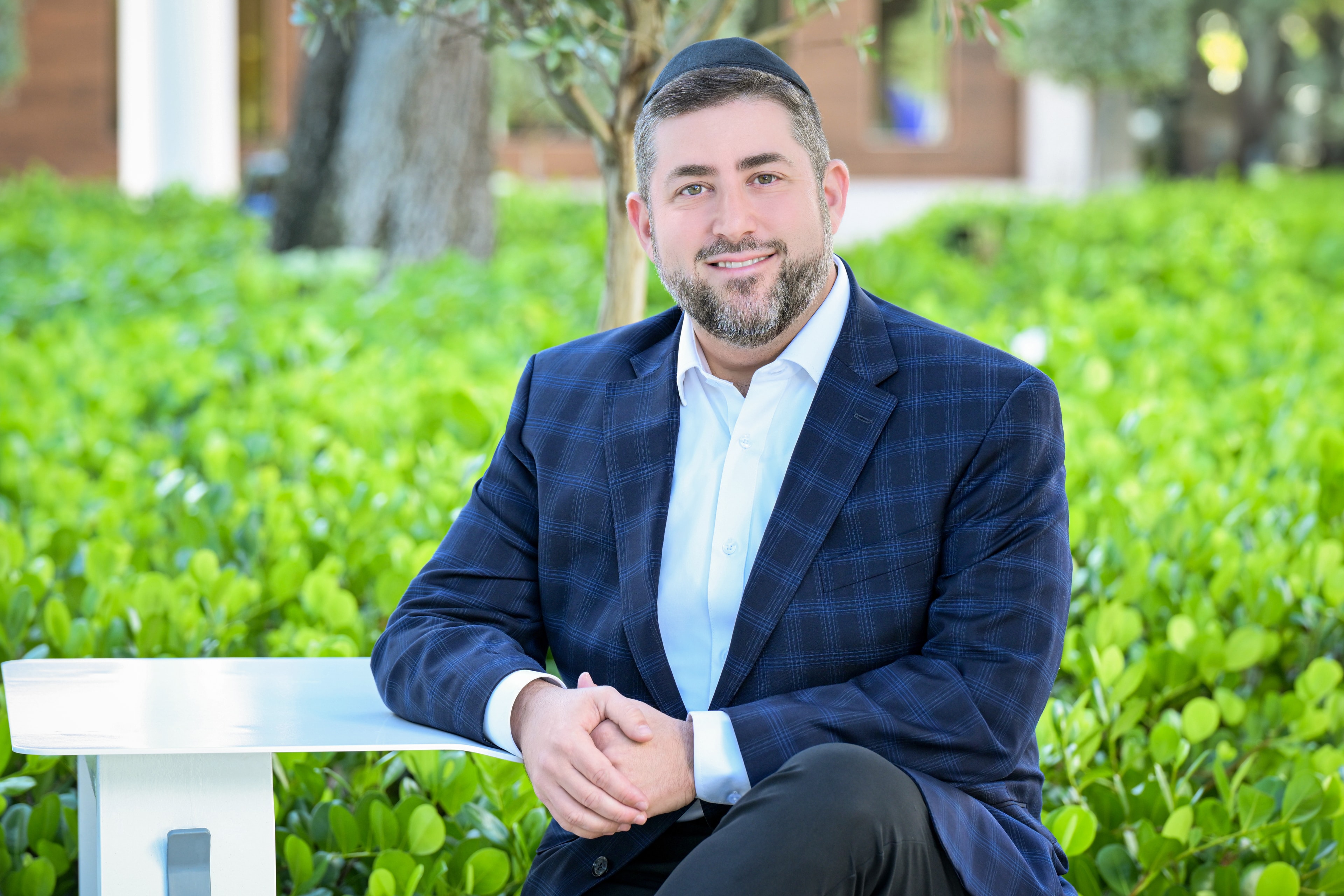
Joe Sharp
Joe Sharp is a strategic finance and operations executive with 30+ years of experience serving independent schools and mission-driven organizations.
Schedule a Consultation